

Inventory of threatened flora in the Bahía de Malagueta Wildlife Refuge
Article Sidebar
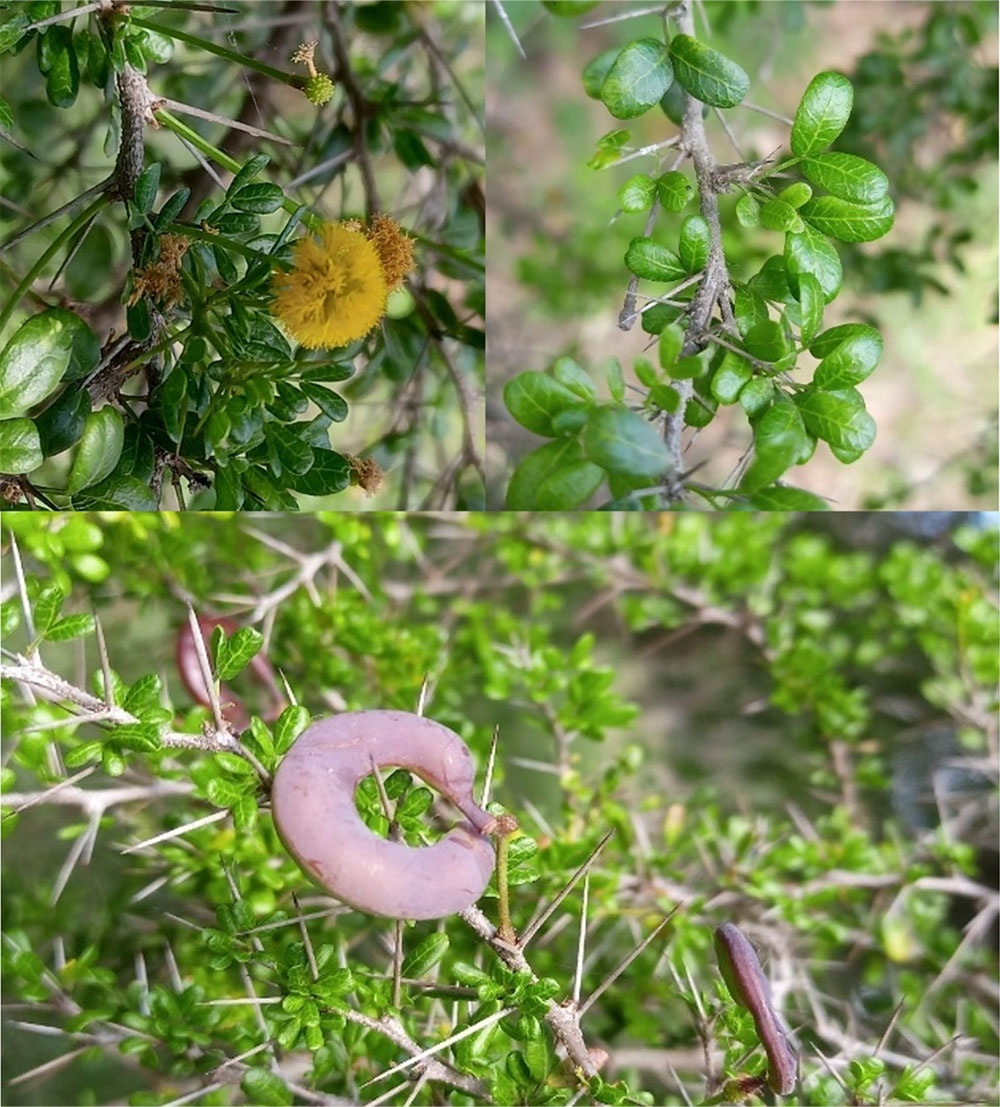
Main Article Content
Abstract
One of the main problems currently facing the Bahía de Malagueta Wildlife Refuge is that information about the true richness of its threatened flora is scattered, as the only existing report was not based on sampling. This has hindered the implementation of effective conservation programs. Therefore, the objective of this research was to inventory the threatened flora present in the Bahía de Malagueta Wildlife Refuge. A floristic inventory was carried out, dividing the study area into strata. The threat category and distribution of each identified species were analyzed, as well as their possible uses. A total of 22 species with some threat category were identified; of these, 17 are new reports for the study area, and one is a new report for the province of Las Tunas. According to their distribution, three of the analyzed species are native and 19 are endemic, of which eight have a restricted distribution. The presence of one endemic fruit tree and three medicinal species is noteworthy. The results indicate that the richness of threatened flora found in the Bahía de Malagueta Wildlife Refuge is 17 species greater than that reported in the Red List of Cuban Flora for this protected area, and that five of the analyzed species are priorities for conservation, and that four threatened plant species of economic interest are present in the study area.
Downloads
Article Details

This work is licensed under a Creative Commons Attribution-NonCommercial 4.0 International License.
Those authors who have publications with this journal accept the following terms of the License Attribution-NonCommercial-ShareAlike 4.0 International (CC BY-NC-SA 4.0):
You are free to:
- Share — copy and redistribute the material in any medium or format
- Adapt — remix, transform, and build upon the material
- The licensor cannot revoke these freedoms as long as you follow the license terms.
Under the following terms:
- Attribution — You must give appropriate credit , provide a link to the license, and indicate if changes were made . You may do so in any reasonable manner, but not in any way that suggests the licensor endorses you or your use.
- NonCommercial — You may not use the material for commercial purposes .
- ShareAlike — If you remix, transform, or build upon the material, you must distribute your contributions under the same license as the original.
- No additional restrictions — You may not apply legal terms or technological measures that legally restrict others from doing anything the license permits.
How to Cite
References
Albert, D. (2017). Zygophyllaceae. In Flora de la República de Cuba, Ser. A, Plantas vasculares: Vol. Fasc 22.
Albert, D. (2005). Meliaceae. In W. Greuter & R. Rankin (Eds.), Flora de la República de Cuba. Serie A, PlantasVasculares (Vol. 5). Koeltz Scientific Books, Königstein.
Bacon, E., Gannon, P., Stephen, S., Seyoum-Edjigu, E., Schmidt, M., Lang, B., Sandwith, T., Xin, J., Arora, S., Adham, K. N., Espinoza, A. J. R., Qwathekana, M., Prates, A. P. L., Shestakov, A., Cooper, D., Ervin, J., Dias, B. F. de S., Leles, B., Attallah, M., … Gidda, S. B. (2019). Aichi Biodiversity Target 11 in the like-minded megadiverse countries. Journal for Nature Conservation, 51, 125723. https://doi.org/10.1016/J.JNC.2019.125723
Berendsohn, W. (2022). Flora de Cuba en Línea . https://floradecuba.org/inicio
Beyra, A. (1998). Las leguminosas (Fabaceae) de Cuba, II: Tribus Crotalarieae, Aeschynomeneae, Millettieae y Robinieae. Collectanea Botanica, 24, 150-332.
Bone, K., & Clarke, P. (2020). Global Endangered Plant Species : Conservation Methods , Challenges , And Strategies for Safeguarding Biodiversity in Terrestrial and Marine Ecosystems. Australian Herbal Insight, 3(1), 1-6. https://doi.org/10.25163/ahi.31993
Capote, R., & Berazaín, R. (1984). Clasificación de las formaciones vegetales de Cuba. Revista Del Jardín Botánico Nacional, 5, 27-75. https://www.jstor.org/stable/42596743
CNAP. (2023). Plan del Sistema Nacional de Áreas Protegidas 2023-2030. https://www.snap.cu/ecovalor/wp-content/uploads/2024/12/Plan-de-sistema-2023.pdf
Cowell, C., Bissett, C., & Ferreira, S. (2020). Top-down and bottom-up processes to implement biological monitoring in protected areas. Journal of Environmental Management, 257, 109998. https://doi.org/10.1016/J.JENVMAN.2019.109998
Darbyshire, I., Anderson, S., Asatryan, A., Byfield, A., Cheek, M., Clubbe, C., Ghrabi, Z., Harris, T., Heatubun, C. D., Kalema, J., Magassouba, S., McCarthy, B., Milliken, W., de Montmollin, B., Lughadha, E. N., Onana, J.-M., Saïdou, D., Sârbu, A., Shrestha, K., & Radford, E. A. (2017). Important Plant Areas: revised selection criteria for a global approach to plant conservation. Biodiversity and Conservation, 26(8), 1767-1800. https://doi.org/10.1007/s10531-017-1336-6
De Nova, A., Enríquez-Salaices-Valdez, E., Castillo Lara, P., Cilia-López, V. G., Yañez-Espinosa, L., Gudiño-Cano, A. K., & Vázquez-Mendoza, S. (2023). Inventario florístico del Área Natural Protegida Parque Nacional El Potosí, San Luis Potosí, México. Acta Botanica Mexicana, 130. https://doi.org/10.21829/abm130.2023.2191
Díaz, Y., Arranz, J., Pacheco, A., Fernández, R., Corbal, P., Cos, P., & Caparros, A. (2023). Chemical composition, antimicrobial and antioxidant activity of a “lipid phase” from zanthoxylum pistaciifolium griseb leaves. ACTA Pharmaceutica Sciencia, 61(3), 269. https://doi.org/10.23893/1307-2080.APS6118
Fernandéz, A., & Bonet, W. (2022). El Jardín Botánico de Las Tunas en el manejo integrado de especies amenazadas de la provincia. . Bissea, 1-1.
Ferro, J., Valdés, J., Alonso, Y., López, M., & Alonso, M. (2016). Observaciones a la flora y vegetación de costa arenosa en el Refugio de Fauna Monte Cabaniguán-Ojo de Agua, Las Tunas, Cuba. Ecovida, 5(2), 204-220. https://dialnet.unirioja.es/servlet/articulo?codigo=9439172
García, J., Bécquer, E., Gómez, J., & González, L. (2024). Catálogo de las Plantas de Cuba. Planta! - Plantlife Conservation Society. https://doi.org/10.70925/cat.2024
Godínez, D., & Volpato, G. (2008). Plantas medicinales que se venden en el mercado El Río, Camagüey, Cuba. Revista Mexicana de Biodiversidad, 79(1), 243-259. https://doi.org/10.22201/ib.20078706e.2008.001.529
González, L., Ferro, J., Rodríguez, D., & Berazaín, R. (2017). Métodos de inventario de plantas. In C. A. Mancina & D. D. Cruz Flores (Eds.), Diversidad biológica de Cuba: métodos de inventario, monitoreo y colecciones biológicas (pp. 60-85). Instituto de Ecología y Sistemática. https://www.undp.org/es/latin-america/publicaciones/diversidad-biologica-de-cuba-metodos-de-inventario-monitoreo-y-colecciones-biologicas
González, R., Vidal, M., Jiménez, M., & Villamarín, D. (2024). Gestión de áreas protegidas en el Ecuador: estrategias y conservación. Universidad y Sociedad, 16(4), 160-169. http://scielo.sld.cu/pdf/rus/v16n4/2218-3620-rus-16-04-160.pdf
González, L. ., Palmarola, A., González, L., E.R., T. E., & Barrios, D. (2016). Lista Roja de la Flora de Cuba . Bissea, 10, 1-352. https://www.researchgate.net/publication/309313148_Lista_Roja_de_la_Flora_de_Cuba_-_2016
Gutiérrez, J. (2002). Sapotaceae. In W. Greuter (Ed.), Flora de la República de Cuba. Serie A, PlantasVasculares (Vol. 4). Koeltz Scientific Books, Königstein.
Paredes, O., Jiménez, L., Dávila, J., & Apaza, J. (2024). Contaminación y pérdida de biodiversidad por actividades mineras y agropecuarias: estado del arte. Revista de Investigaciones Altoandinas - Journal of High Andean Research, 26(1), 56-66. https://doi.org/10.18271/ria.2024.594
Trigueros, I., Ruiz, O., Gallardo, F., Solis, B., Morales, F., & Lopez, G. (2023). Use and conservation of medicinal plants obtained from agroecosytems and ecosystems by the Mochó and Kakchikel ethnic groups of southeastern Chiapas, México. Boletin Latinoamericano y Del Caribe de Plantas Medicinales y Aromaticas, 22(1), 100-114. https://doi.org/10.37360/blacpma.23.22.1.8
Verdecia, R., Gutiérrez, J., Falcón, B., Fuentes, S., Köster, N., & Castañeda, I. (2014). Apuntes sobre la flora y vegetación de La Isleta, Manatí, Las Tunas. Revista Del Jardín Botánico Nacional, 34, 91-93. https://www.jstor.org/stable/43152815